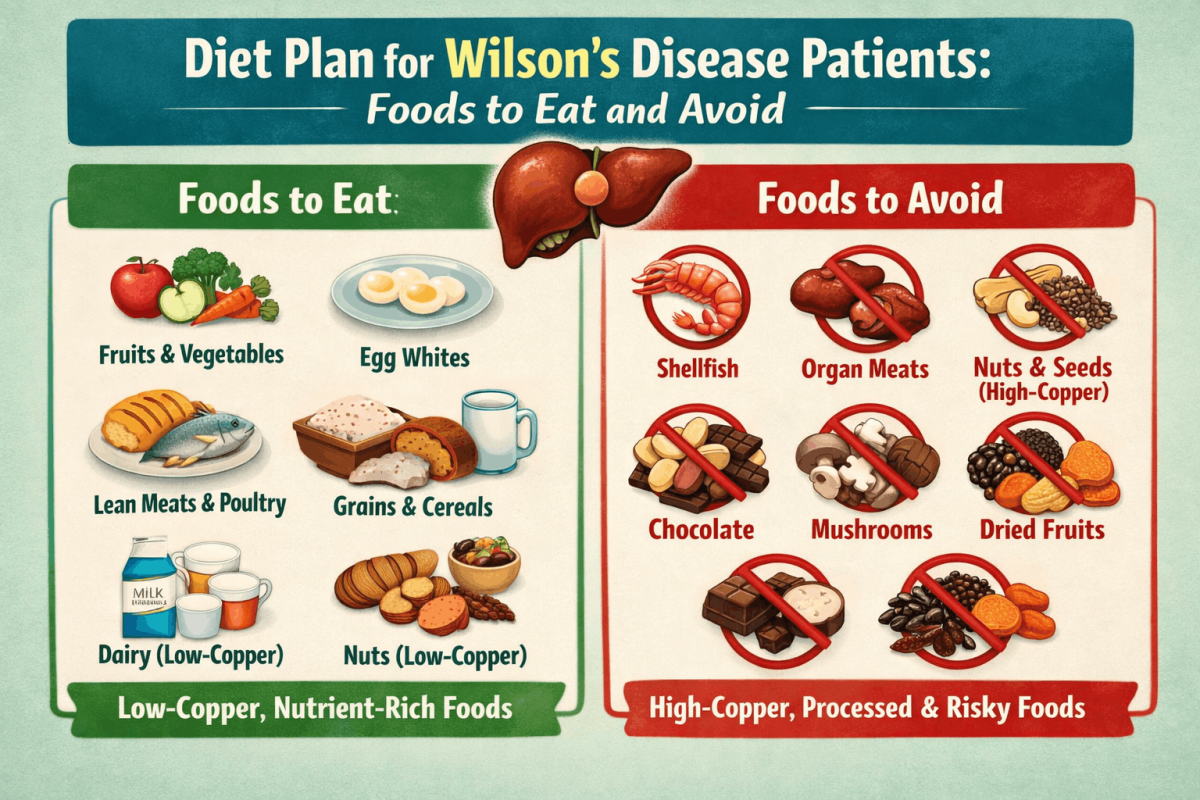
Diet Plan for Wilson’s Disease Patients: Foods to Eat and Avoid
Living with Wilson’s Disease requires careful management of copper levels in the body. Since this rare genetic disorder causes the body to accumulate excess copper in organs like the liver and brain, diet plays an important role in managing symptoms and supporting treatment.
Following a proper Wilson’s Disease diet can help reduce copper intake and improve overall health. Along with medications such as Trientine treatment for Wilson’s Disease, a well-balanced diet helps patients maintain healthy copper levels and prevent complications.
In this guide, we explain the best diet plan for Wilson’s Disease patients, including foods to eat, foods to avoid, and helpful lifestyle tips.
Understanding Diet in Wilson’s Disease:
People with Wilson’s Disease have difficulty removing excess copper from their bodies. As copper accumulates, it can damage the liver, brain, and other organs.
This is why doctors often recommend:
-
Copper-restricted diet
-
Long-term medication such as Trientine
-
Regular monitoring of copper levels
A proper Wilson’s Disease diet plan helps reduce additional copper intake from food sources.
Foods to Eat for Wilson’s Disease Patients:
While managing copper intake is important, patients should still maintain a nutritious and balanced diet. The following low-copper foods are generally considered safe for most patients.
1. Fruits:
Many fruits contain low levels of copper and are safe to include in a diet for Wilson’s Disease.
Recommended fruits include:
-
Apples
-
Bananas
-
Papaya
-
Watermelon
-
Grapes
-
Pears
These fruits also provide vitamins and antioxidants that support liver health.
2. Vegetables:
Several vegetables are naturally low in copper and suitable for a Wilson’s Disease diet plan. Examples include:
-
Cabbage
-
Cucumbers
-
Lettuce
-
Zucchini
-
Pumpkin
-
Cauliflower
Vegetables are rich in fiber and help maintain digestive health.
3. Grains and Cereals:
Grains provide essential energy and nutrients. Low-copper grain options include:
-
White rice
-
Pasta
-
Refined wheat products
-
Oats
-
Corn products
These foods can form the foundation of a healthy diet for Wilson’s Disease patients.
4. Dairy Products:
Dairy foods contain very little copper and are generally safe. Examples include:
-
Milk
-
Yogurt
-
Cheese
-
Butter
Dairy products are also a good source of calcium and protein.
5. Protein Sources:
Protein is essential for maintaining muscle strength and overall health. Recommended protein sources:
-
Eggs
-
Chicken
-
Turkey
-
Lean meat (in moderation)
Patients should always consult their doctor when planning protein intake.
Foods to Avoid in Wilson’s Disease:
Because Wilson’s Disease causes copper accumulation, patients should avoid foods that are high in copper. Below are some foods to avoid in Wilson’s Disease.
1. Shellfish:
Shellfish contain very high levels of copper. Avoid foods such as:
-
Oysters
-
Lobster
-
Crab
-
Shrimp
2. Organ Meats:
Organ meats are among the richest sources of copper. Examples include:
-
Liver
-
Kidney
-
Brain
These foods should be completely avoided in a Wilson’s Disease diet.
3. Nuts and Seeds:
Nuts and seeds contain significant amounts of copper. Foods to limit or avoid include:
-
Almonds
-
Cashews
-
Peanuts
-
Sunflower seeds
4. Chocolate and Cocoa:
Chocolate products contain relatively high copper levels.
Patients should avoid:
-
Dark chocolate
-
Cocoa powder
-
Chocolate drinks
5. Mushrooms:
Some mushroom varieties contain higher copper concentrations and should be consumed cautiously or avoided.
Importance of Medication Along With Diet:
While diet helps control copper intake, it cannot remove excess copper already present in the body. This is why physicians prescribe medications such as Trientine, which acts as a copper chelator.
Trientine treatment for Wilson’s Disease helps bind copper in the body and remove it through urine.
Combining:
-
Proper Wilson’s Disease diet plan
-
Medical therapy
-
Regular monitoring
helps patients manage the condition more effectively.
Additional Lifestyle Tips for Wilson’s Disease Patients:
Following a healthy lifestyle can further support treatment. Helpful tips include:
-
Drink safe, filtered water to avoid copper contamination
-
Avoid cooking with copper utensils
-
Maintain regular medical check-ups
-
Follow the prescribed Wilson’s Disease treatment
These steps help patients maintain better control over copper levels.
Daily Diet Plan for Wilson’s Disease Patients:
Below is a simple example diet plan for Wilson’s Disease.
Breakfast:
-
Oatmeal with milk
-
Banana or apple
Lunch:
-
White rice or chapati
-
Boiled vegetables
-
Grilled chicken
Evening Snack:
-
Yogurt with fruit
Dinner:
-
Pasta or rice
-
Vegetable soup
-
Lean protein, such as chicken or eggs
Always consult a healthcare professional before making dietary changes.
Conclusion:
Managing Wilson’s Disease requires a combination of proper treatment and careful dietary choices. Following a balanced Wilson’s Disease diet plan can help reduce copper intake while maintaining overall health.
Patients should focus on low-copper foods, avoid foods high in copper, and follow their doctor’s prescribed treatment plan. When combined with Trientine treatment for Wilson’s Disease, a well-planned diet can significantly support long-term disease management.
Frequently Asked Questions:
What foods should Wilson’s Disease patients avoid?
Patients should avoid high-copper foods such as shellfish, organ meats, nuts, chocolate, and certain mushrooms.
Can diet alone treat Wilson’s Disease?
No. A Wilson’s Disease diet helps reduce copper intake, but medications such as Trientine are required to remove excess copper from the body.
Is milk safe for Wilson’s Disease patients?
Yes. Dairy products generally contain low copper levels and are usually safe as part of a diet plan for Wilson’s Disease patients.
Medical References and Sources:
-
National Organization for Rare Disorders (NORD) – Wilson Disease Detailed Report
-
National Library of Medicine – MedlinePlus – Wilson Disease Information for Patients
-
Cleveland Clinic – Wilson Disease: Symptoms, Causes, Diagnosis & Treatment
-
National Institutes of Health (NIH) – Genetics Home Reference: Wilson Disease
-
Orphanet – Rare Disease Database – Wilson Disease Information and Clinical Data
