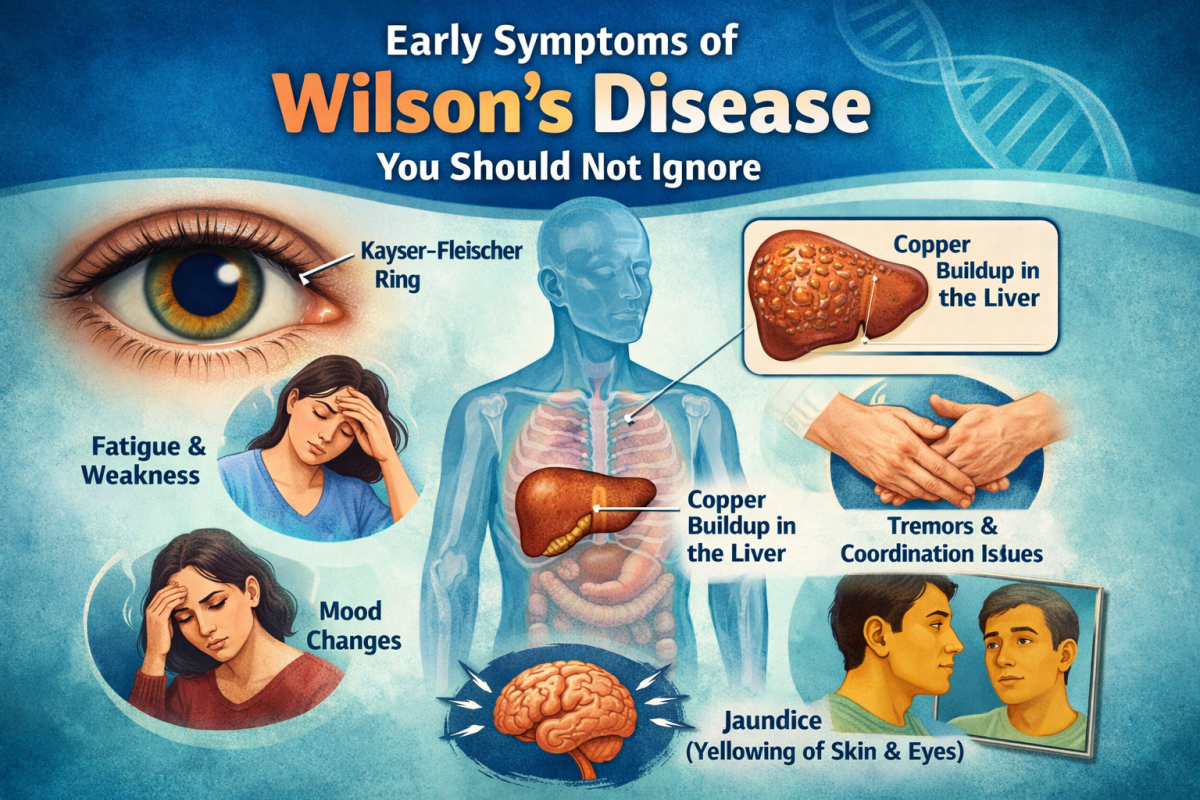
Wilson's disease is a rare inherited metabolic disorder. It leads to toxic copper accumulation in the liver, brain, and other important organs. Identifying Wilson's disease symptoms early is important. Untreated copper overload can cause irreversible liver damage, neurological impairment, and psychiatric problems.
With early diagnosis and complete treatment of Wilson's disease, most patients can live a normal life expectancy.
This medical guide covers:
-
Early signs of Wilson's Disease
-
Diagnostic approach
-
Wilson's disease treatment options
-
Chelating therapy for Wilson Disease
-
Role of Trientine for Wilson's Disease in India
-
Alternatives to penicillamine
What is Wilson's Disease?
Wilson's disease is a genetic condition caused by mutations in the ATP7B gene. This mutation prevents proper copper elimination from the body. Instead of being excreted through bile, copper accumulates in:
-
Liver
-
Brain
-
Cornea (eyes)
-
Kidneys
The condition is inherited in an autosomal recessive pattern, meaning both parents must carry the gene mutation.
Early Signs and Wilson Disease Symptoms:
Symptoms vary depending on which organs are affected. Early detection significantly improves treatment outcomes.
Liver-Related Wilson Disease Symptoms: The liver is often the first organ affected. Early signs include:
-
Persistent fatigue
-
Jaundice (yellowing of skin and eyes)
-
Elevated liver enzymes
-
Abdominal swelling
-
Unexplained nausea
-
Easy bruising
In children and adolescents, unexplained liver dysfunction should raise suspicion.
Neurological Early Signs: When copper accumulates in the brain, neurological symptoms appear:
-
Hand tremors
-
Slurred speech
-
Muscle stiffness
-
Poor coordination
-
Difficulty swallowing
-
Slow or abnormal movements
These symptoms are sometimes misdiagnosed as Parkinson’s disease or other movement disorders.
Psychiatric and Behavioral Changes: Early psychiatric symptoms may include:
-
Depression
-
Anxiety
-
Irritability
-
Mood swings
-
Cognitive decline
Because psychiatric changes can precede liver symptoms, diagnosis is sometimes delayed.
Kayser-Fleischer Rings: A hallmark sign of Wilson's disease is the presence of Kayser-Fleischer rings — copper deposits around the cornea visible during slit-lamp eye examination.
Diagnosis of Wilson's Disease:
To minimize the risk of permanent damage, Wilson’s disease must be diagnosed quickly and correctly. Doctors generally consider the following:
-
Blood Tests: Low ceruloplasmin levels and elevated liver enzymes
-
24-Hour Urine Copper Test: Measures excess copper excretion.
-
Liver Biopsy: Used in complex cases to measure hepatic copper concentration.
-
Genetic Testing: Confirms ATP7B gene mutation.
-
Ophthalmologic Examination: Detects Kayser-Fleischer rings.
The chances of a good prognosis are markedly improved by early diagnosis.
Treatment of Wilson's Disease:
The purpose of treatment is to eliminate excess copper and prevent re-accumulation. Treatment is lifelong and typically involves:
-
Chelating therapy
-
Zinc therapy
-
Dietary copper restriction
Chelating Therapy for Wilson's Disease:
Chelating agents are intended to bind excess copper and promote its excretion through urine. There are two primary chelators:
-
Penicillamine: Historically, it is the first-line therapy. But it is associated with certain side effects in some patients.
-
Trientine: Often used as an alternative to penicillamine in Wilson's disease. It is particularly used in patients who develop intolerance or adverse reactions.
Medical supervision is required for chelation therapy along with regular assessment of copper levels.
Trientine for Wilson Disease in India:
Trientine is an important chelating agent for long-term copper removal. Patients and caregivers frequently search for:
-
Trientine in India
-
Buy Trientine in India
-
Trientine manufacturer in India
-
Trientine supplier in India
-
Trientine for Wilson Disease in India
Access to Trientine in India typically requires:
-
Specialist prescription
-
Confirmed diagnosis
-
Regulatory compliance
Specialized pharmaceutical suppliers assist hospitals and patients in accessing Trientine through appropriate legal and medical channels. Patients should only use Trientine under medical supervision.
Alternative to Penicillamine in Wilson's Disease
For patients who cannot tolerate penicillamine because of side effects such as:
-
Skin reactions
-
Kidney complications
-
Bone marrow suppression
Doctors may prescribe Trientine as a safer alternative in most cases. Individual treatment plans may vary depending on:
-
Age
-
Severity of the disease
-
Organ involvement
-
Tolerance to medicine
Long-Term Management of Wilson Disease
Successful management of this genetic disorder requires:
-
Lifelong use of therapy
-
Liver function testing
-
Neurological assessment
-
Dietary counseling
-
Regular monitoring of the copper level
With timely diagnosis and continuous treatment, patients can prevent serious complications such as:
-
Liver failure
-
Psychiatric deterioration
-
Severe neurological damage
Final Thoughts:
In the case of Wilson's disease, irreversible damage to organs can be avoided with early recognition of the signs of Wilson's disease. If Wilson's disease runs in your family, or if you have noticed the symptoms, you should get evaluated as soon as possible.
Outcomes of chelation therapy with Trientine, where appropriate, can be markedly improved with early diagnosis.
Frequently Asked Questions (FAQ):
What are the earliest Wilson's disease symptoms?
Fatigue, liver enzyme elevation, tremors, mood changes, and Kayser-Fleischer rings are common early signs.
How is Wilson's disease diagnosed?
Diagnosis is typically performed with blood tests, urine copper tests, liver biopsy (in some cases), genetic testing, and eye examination.
What is the best treatment for Wilson's disease?
Chelating therapy (trientine or penicillamine) is a standard treatment used by clinicians to treat Wilson's disease.
Can Wilson's disease be cured?
Wilson's disease can be managed with early treatment and lifelong management.
Is Trientine for Wilson's disease available in India?
Trientine in India is available and can be readily accessed through a specialized supplier like Ikris Pharma Network with a valid prescription.
Medical Disclaimer
This article is for educational use only, not for professional medical services. A professional medical service provider, not the author, must take the final call regarding diagnosis and treatment.
References & Medical Sources
The following reputable medical organizations and clinical resources were consulted in preparing this educational guide on Wilson's disease:
-
National Institute of Diabetes and Digestive and Kidney Diseases (NIDDK)- Wilson's Disease Overview
-
National Institutes of Health (NIH) – Genetic and Rare Diseases Information Center (GARD)
-
World Health Organization (WHO)- Essential Medicines and Rare Disease Guidance
-
U.S. National Library of Medicine – MedlinePlus- Wilson Disease
-
PubMed – NCBI- Clinical Studies on Wilson Disease and Chelation Therapy
Author & Review Information:
Medical Content Reviewed by: Qualified healthcare professional with experience in metabolic and rare liver disorders.
Content Purpose: To provide evidence-based educational information about Wilson Disease, early symptoms, diagnosis, and available treatment options, including chelating therapy.
Last Updated: 2026
